
The Science of Counting Calories
Biochemistry for Eaters
Nuclear physicist Ernest Rutherford said that all science is either physics or stamp collecting. Here, I will not make lists like “Top 10 Nutritional Facts” or “The 3 Magic Foods for Losing Weight,” nor parrot truisms such as “eat less, exercise more.” Instead, we are going to dig into the science of calories, exploring their physical, chemical, and metrological intricacies. We’ll take a closer look at how our bodies transform food into calories, the metabolic path to body fat, and what we really lose when we lose weight. With this scientific framework for thinking about dieting, I will offer an unjaded answer to the question, “Should we count calories?”
But first, let’s find out what we are talking about when we talk about calories.
Calories? What Calories?
In physics, a calorie is the amount of energy needed to raise the temperature of 1 gram of water from 14.5 degrees Celsius to 15.5 degrees Celsius.
It’s a little more than what you are used to, isn’t it? The specific heat of water depends on its condition. In the isobaric (constant pressure) condition, which is our usual condition, water’s specific heat in the liquid phase is higher at both 0 degrees Celsius and 100 degrees Celsius and dips slightly at 15 degrees Celsius. In the isochoric (constant volume) condition, the specific heat vs. temperature curve is a gentle downward slope from 0 to 100 degrees Celsius.
When we talk about how much energy is in food, it’s important to understand that energy can take different forms. Take a carrot, for instance. Elevated atop a skyscraper, it has potential energy and, if released, could do serious damage to the sidewalk. A freshly baked carrot is full of thermal energy and could burn you. If we were to start a nuclear reaction with the carrot and manage to convert all its mass into energy, according to the famous equation from the theory of special relativity, , a big carrot could power the whole world for half a day.
So the real question we should be asking is: how do our bodies harvest energy from food? They do this through a series of chemical reactions collectively known as metabolism, which we will go into in more detail later. For now, it suffices to know that these reactions start with food and oxygen and end with carbon dioxide, water, indigestible waste, and energy. If we think of food as fuel, and the indigestible waste as ash, that sounds just like combustion. Actually, a calorimeter is the commonly used scientific tool to measure the energy yield of food upon its combustion. It consists of a pressurized capsule with food and pure oxygen inside, surrounded by water. You light the food on fire. After all the content is burned up, you measure how much the water’s temperature changed to figure out how much energy was released. On average, according to the calorimeter, carbohydrates release 4.2 kcal per gram, fats give off 9.5 kcal per gram, and proteins provide 5.65 kcal per gram.
However, if you look up calories for different foods in the USDA (U.S. Department of Agriculture) database, you will see that they use something called the Atwater General Factors: 4 kcal for each gram of carbohydrate, 9 kcal for each gram of fat, and 4 kcal for each gram of protein. The discrepancy between these figures and those obtained via calorimetry exists not because the government employs a bunch of elitists who think the general public cannot handle decimal points. Rather, it reflects the meticulous and considerate approach of Mr. Atwater in his investigations.
Let’s consider how the chemical energy is released differently in the body than in a calorimeter. First off, our bodies don’t digest everything we eat. Some stuff leaves our body as feces, and the energy in them is gone. Secondly, while a lab calorimeter can burn up all the nitrogen in proteins, we don’t. Excess nitrogen is converted to urea and leaves the body in urine. Third, the digestive process itself expends energy. Wilbur Atwater, the progenitor of the Atwater system and the inaugural chief of nutrition investigations at the USDA, arrived at those round numbers (4, 9, 4) after rigorously designed, conducted, and documented experiments. Atwater also determined the energetic value of alcohol to be 7 kcal per gram. That got him into trouble with his employer, Wesleyan University, under the patronage of the Methodist Church. This was not long before the Prohibition period. The Church was advertising that alcohol was nothing but poison. Atwater’s rebuttal laid bare the intrinsic contradictions of organized religions: the Almighty would not wish moral teachings to be based on untruths.
But the discrepancies between the available energy in food and the values measured in the calorimeter didn’t stop there. In the 1950s, USDA scientists concluded that the Atwater general factors should be further refined because: 1. There are 20 different amino acids, the building blocks of protein. Each one has its own chemical makeup. This means the amount of nitrogen can vary depending on the types of protein in the food. 2. The digestion of foods is influenced by their constituent mix, leading to differential absorption rates. The scientists crunched the data and built a big table for a list of foods. These are called the Atwater specific values. Here are some examples:

Now we are really collecting stamps.
But here’s the thing: we don’t actually get all the energy from the food we digest. Like digestion, the process of metabolism itself incurs an energy expenditure. Conversely, not all the energy in food we can’t digest is a total loss. Bacteria in the large intestine ferment certain fibers and produce free fatty acids, which are absorbed into the bloodstream. In light of these and other conditions, food scientist Geoffrey Livesey proposed the concept of net metabolizable energy. His numbers are: 3.2 kcal for protein, 8.9 kcal for fat, 3.8 kcal for available carbs, and 1.9 kcal for fermentable carbs.
Here is a brief summary of what we have learned so far.
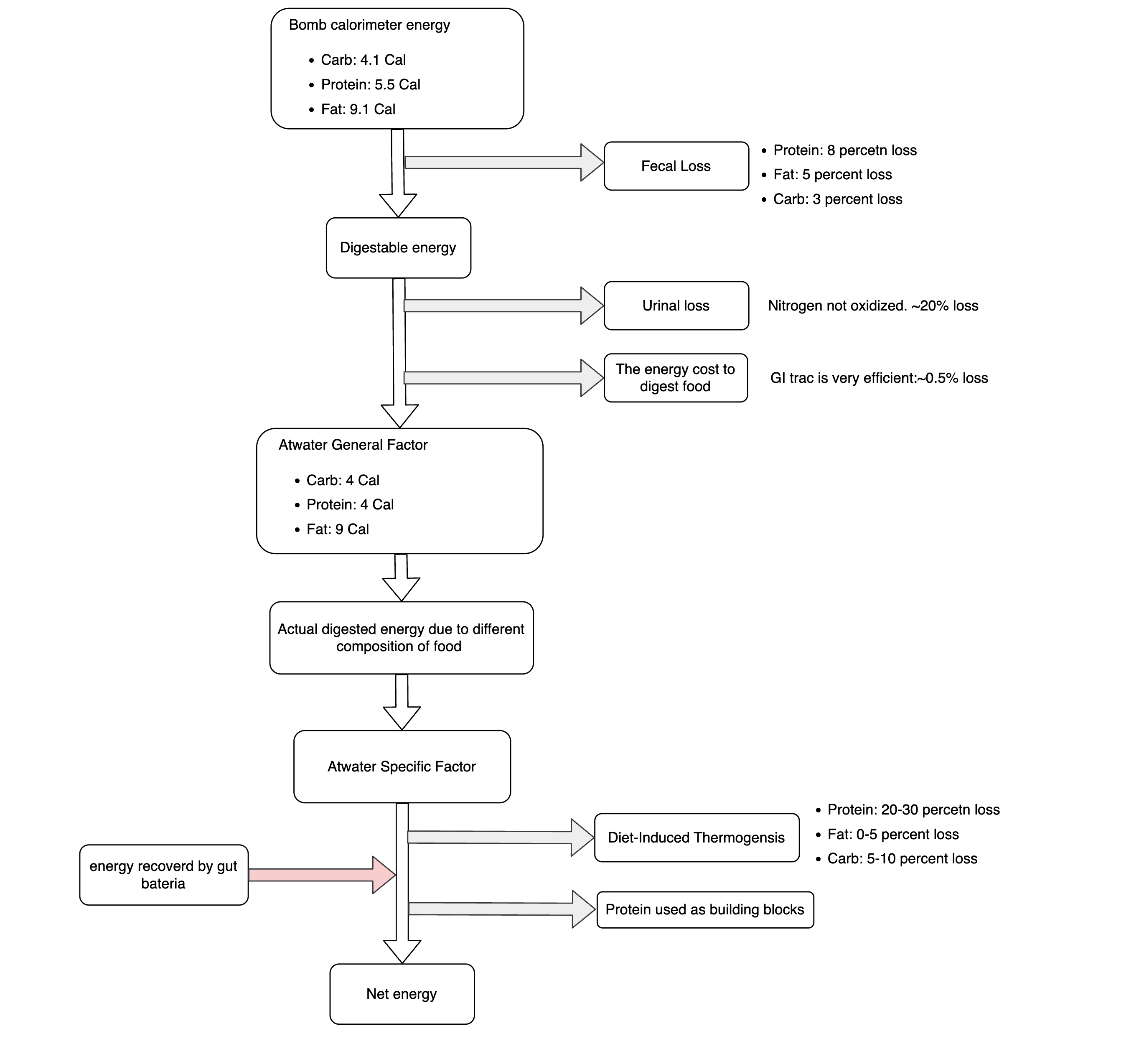
Figure 1. The flow of calories
Regrettably, we have not considered all the adjustments necessary to count calories accurately. For instance, almonds are pretty high in fat, but that fat is locked up inside cell walls that our bodies can’t break down. The size of these tiny cells is about 35 micrometers. After chewing, only about 10% of these cells are broken. Studies show that 30% fewer calories are absorbed from whole nuts compared to what’s available. The same almonds, if consumed in the form of slices, or if you put them in a blender and make almond butter, have more broken cells and consequently, unleash more fat in your body. For cooked food, it’s even more complicated, as discussed here.
I will end this discussion with a bit of good news for those of you counting calories: practically, the differences don’t matter. Even in the most carefully controlled studies, the error in weighing foods is rarely under 5%. As I mentioned earlier, how foods are prepared can significantly alter the amount of calories in them. Whatever inaccuracies exist in the Atwater factors, they are overwhelmed by these real-world variables. It’s not just my opinion. In 2002, the United Nations’ Food and Agriculture Organization (FAO) convened a meeting of international experts, including Livesey, to consider if it makes sense to use net metabolizable energy in place of the Atwater general factors. The conclusion? Don’t bother.
Measuring Our Body’s consumption of Calories
We have yet to answer a fundamental question: how do we really prove that our bodies get energy from food by burning it, like a sort of slow combustion? For that, we need to quantify how much energy we’re actually getting after we eat. A straightforward way is to build a human-sized calorimeter, but instead of setting food on fire, we let our bodies do their thing and then measure the heat that comes out. That is exactly what early scientists, including Atwater, did.
The earliest whole-body calorimeter was a large double-walled chamber. The space between the inner wall and outer wall was filled with ice. The research subject was confined inside the chamber and went about his business (it was always a him, it seems) as normally as possible. By measuring how much ice melted, scientists could work out how much heat he generated. The subject’s feces and urine were also collected so the energy content could be analyzed.
Mr. Atwater built one of these at Wesleyan University. His chamber not only measured heat but also measured the oxygen intake and carbon dioxide excretion, thus indirectly measuring energy produced from oxidation. That works because when you “burn” food in your body, you need oxygen for the reaction, and one of the products of that reaction is carbon dioxide. Here are the chemical equations of several different types of combustion:
Combustion of Coal (equation 1):
Combustion of cooking gas (equation 2):
Combustion of Glucose (equation 3):
Combustion of a typical fatty acid – Palmitic acid (equation 4):
Equations 3 and 4 are not exactly how metabolism happens, more like approximations that skip a few intermediate steps. Despite the simplification, they show why measuring oxygen consumed and carbon dioxide produced tells us what kind of fuel the body is oxidizing. The respiratory quotient (RQ) is the ratio of carbon dioxide produced to oxygen consumed. The heat released per liter of oxygen also varies by fuel, which lets respiration measurements estimate energy expenditure.
Since Atwater’s days, portable respiration calorimeters have been developed. However, these devices still present limitations by impeding normal activities. In the 1960s, a less invasive way to estimate energy expenditure over ordinary life was developed: the doubly labeled water method.
Water molecules consist of two hydrogen atoms and one oxygen atom. Usually, hydrogen atoms have one proton and no neutron, while oxygen atoms have eight protons and eight neutrons. In the doubly labeled water variant, the hydrogen isotope has one proton and one neutron, and the oxygen isotope has eight protons and ten neutrons. At the beginning of the measurement, the subject drinks some doubly labeled water. The key insight here is that while the heavy hydrogen is expelled from the body exclusively through urine and perspiration, the heavy oxygen can leave both via excreted fluids and exhaled carbon dioxide. As the individual continues to consume regular water and food, the isotopes will be diluted at different rates. So with a few careful measurements of urine samples along the way and some sophisticated data processing, the amount of carbon dioxide exhaled during the measurement period can be deduced.
Incidentally, this answers the question: what do we actually lose when we lose weight? Mass leaves your body in the form of carbon dioxide and water. Although some water may come from your drinking, the carbon dioxide is exclusively derived from metabolized food. Unless you are breathing harder, you are not losing more weight. That explains why rapid weight loss is implausible without a loss of water weight: there is a limit to how hard you can breathe.
Various doubly labeled water measurements show that adult men typically burn more than 3,000 calories a day. A discrepancy arises from the self-reported intake of American adult males, which, according to the large-scale survey “What We Eat in America”—conducted jointly by the Centers for Disease Control and Prevention (CDC) and the United States Department of Agriculture (USDA)—averages 2,500 calories. This survey involved detailed and regular interviews of 8,500 individuals about what they eat.
If this upside-down result gives you pause about the first law of thermodynamics, consider the National Health and Nutrition Examination Survey, also administered by the CDC. The height of 5,000 Americans was measured, and then they were asked what their heights were. On average, men overestimated their height by half an inch. That is all you need to know about how much you can trust self-reported data.
On the other side of 3,000, the USDA adds up the foods produced in the United States, plus imports, and minus exports, sort of like a GDP for food. The per capita calorie availability number for Americans is 3,900. Notably, 12% of Americans say they regularly buy products that are labeled as having a small carbon footprint. If you truly care about the environmental impact of food, just eat less and waste less. It’s good for your body, your wallet, and your planet.
Follow the Calories
We have literally just scratched the surface: we have only talked about what can be observed about calories from outside our bodies. Let’s get into what happens on the inside when we eat food.
First, we need to distinguish two concepts that are often conflated: digestion and metabolism. Digestion is the process by which the body breaks down food in the gastrointestinal (GI) tract and eliminates waste. Metabolism refers to the cellular activities that transform digested food into energy. For this discussion, digestion ends when food is broken down into simple nutrients (glucose, fatty acids, amino acids, etc.) and absorbed into our bloodstream. Metabolism is the subsequent phase when our body synthesizes energy from these inputs.
Our GI tract, from top to bottom, roughly consists of: the mouth, the esophagus, the stomach, the small intestine, the large intestine, the rectum, and the anus. The GI tract is a wonderfully complicated and intricate system. For example, pepsin is a protein-digesting enzyme released by the stomach. Quite thoughtfully, it is only activated by the gastric acid. Once the food moves on from the stomach to the start of the small intestine, the pepsin is neutralized by an alkaline secretion from Brunner’s glands. This mechanism ensures that this protein-eating enzyme will not run amok in the rest of our body, where many parts are made of proteins.
Many of us fail at weight control because we just can’t stop eating. The mechanism by which our body decides we have had enough is complex and not yet fully understood, but it’s not as simple as just having a full belly. Our gut is the largest endocrine (hormone-secreting) organ in the body. As food makes its way through our digestive system, our gut pumps out all sorts of hormones. These hormones are part of a complex messaging system between the gut and the brain. Evidence supporting this interplay is observed in the outcomes of bariatric surgeries. Bariatric comes from the Greek word for weight: baros. Bariatric surgery is just a fancy way of saying weight loss surgery. One type of bariatric surgery works like this: the surgeon reduces the size of your stomach to that of an egg by stapling off a section of the stomach. This newly formed pouch is then directly connected to the small intestine. This way, the food you eat bypasses the rest of the stomach and the upper part of your small intestine.
Two things are surprising about this surgery: First, it works extremely well. Patients lose a lot of weight, fast. And they keep it off. Second, it doesn’t work for the reason doctors thought it would. It was thought that with a smaller stomach, we would feel full with less food. Turns out the stomach is elastic. Not long after the surgery, the small pouch expands back to the size of the original stomach. The real game-changer seems to be the impact on gastrointestinal hormone secretion. After surgery, there’s a spike in several hormones, including one called GLP-1. The weight loss drug Ozempic works by mimicking GLP-1. When food is being digested in the gut, GLP-1 is secreted to signal the pancreas to release insulin in anticipation of the glucose that will enter the bloodstream. The brain perhaps takes this as a sign that we don’t need more food. Because food skips a portion of the GI tract post-surgery, it slides right down to the middle of the small intestine in a less digested state. This changes the mix of hormones the gut sends out, tricking your brain into thinking you’ve eaten more than you actually have.
In the small intestine, glucose, amino acids, and fatty acids enter our bloodstream. Figure 2 is a simplified description of what happens next.
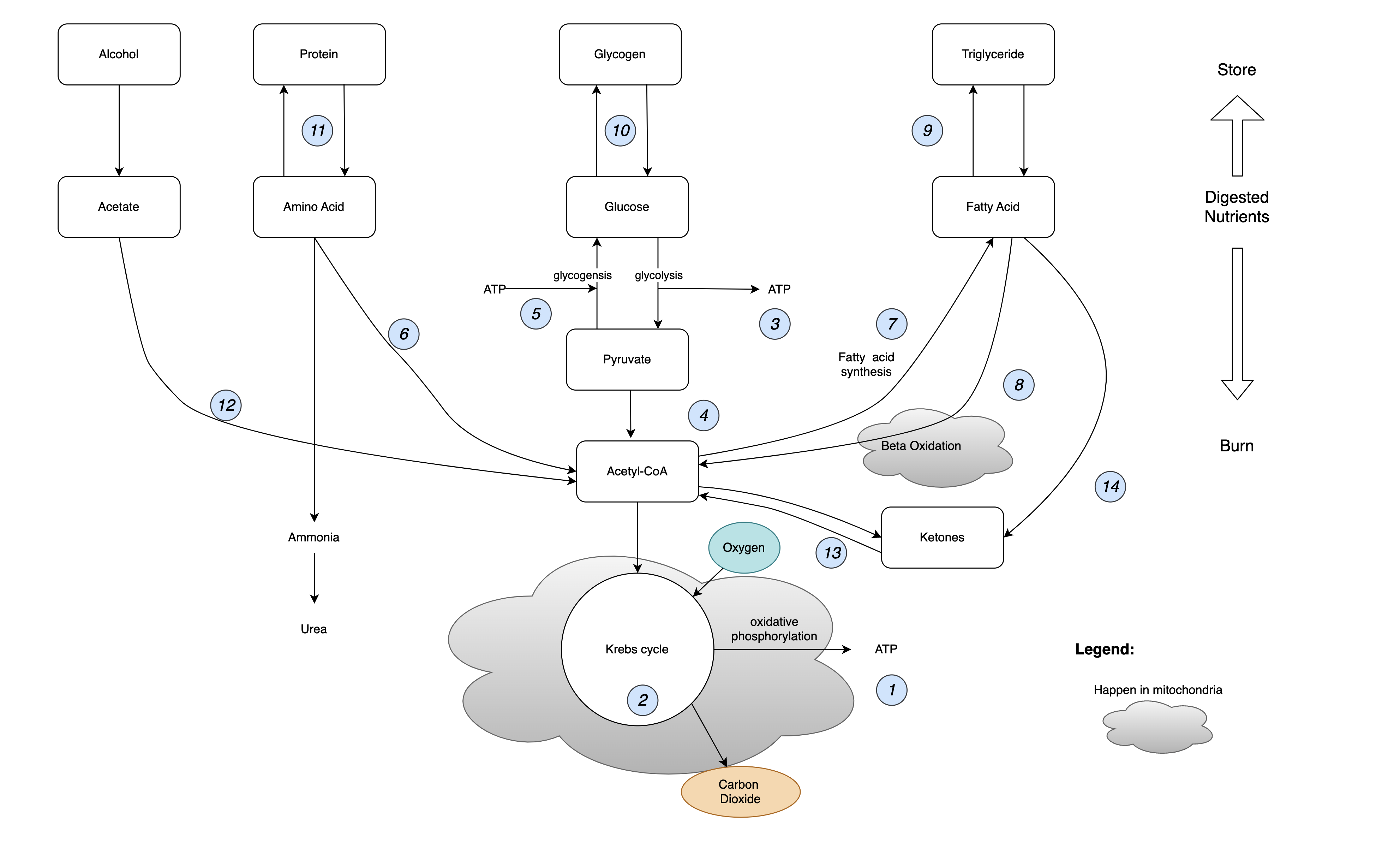
Figure 2. Metabolic Pathways
It looks complicated. But don’t worry, I will now walk you through it:
- ATP, short for adenosine triphosphate, is the energy source for living cells. It acts like a rechargeable battery. An ATP molecule has three phosphoryl groups—hence the prefix “tri.” Energy is stored in the chemical bonds binding the groups together. When a cell needs some juice, ATP breaks one of those bonds, turning a triphosphate molecule into a diphosphate molecule (adenosine diphosphate, aka ADP), and energy is released. ADP can be re-energized to ATP in several ways that we will get into. Remarkably, each ATP molecule is recycled 1,000 to 1,500 times in a single day.
- All life forms on Earth use ATP as their energy storage medium. In plants, photosynthesis generates ATP. In humans, the most efficient mechanism to generate ATP is the citric acid cycle, also known as the Krebs cycle. Figure 3 shows how it works: The bonds between carbon atoms in citrate are broken in the presence of oxygen, producing carbon dioxide, just as it happens in the combustion process inside the calorimeter. The Krebs cycle generates free electrons along with energy, which in turn creates a voltage potential across the inner membrane of mitochondria. This electrical energy is harnessed during oxidative phosphorylation to affix a phosphate group to ADP, thereby synthesizing ATP. Meanwhile, in the other half of the Krebs cycle, the shortened carbon chains are topped up with something called acetyl-CoA, making them long again and ready for another round.
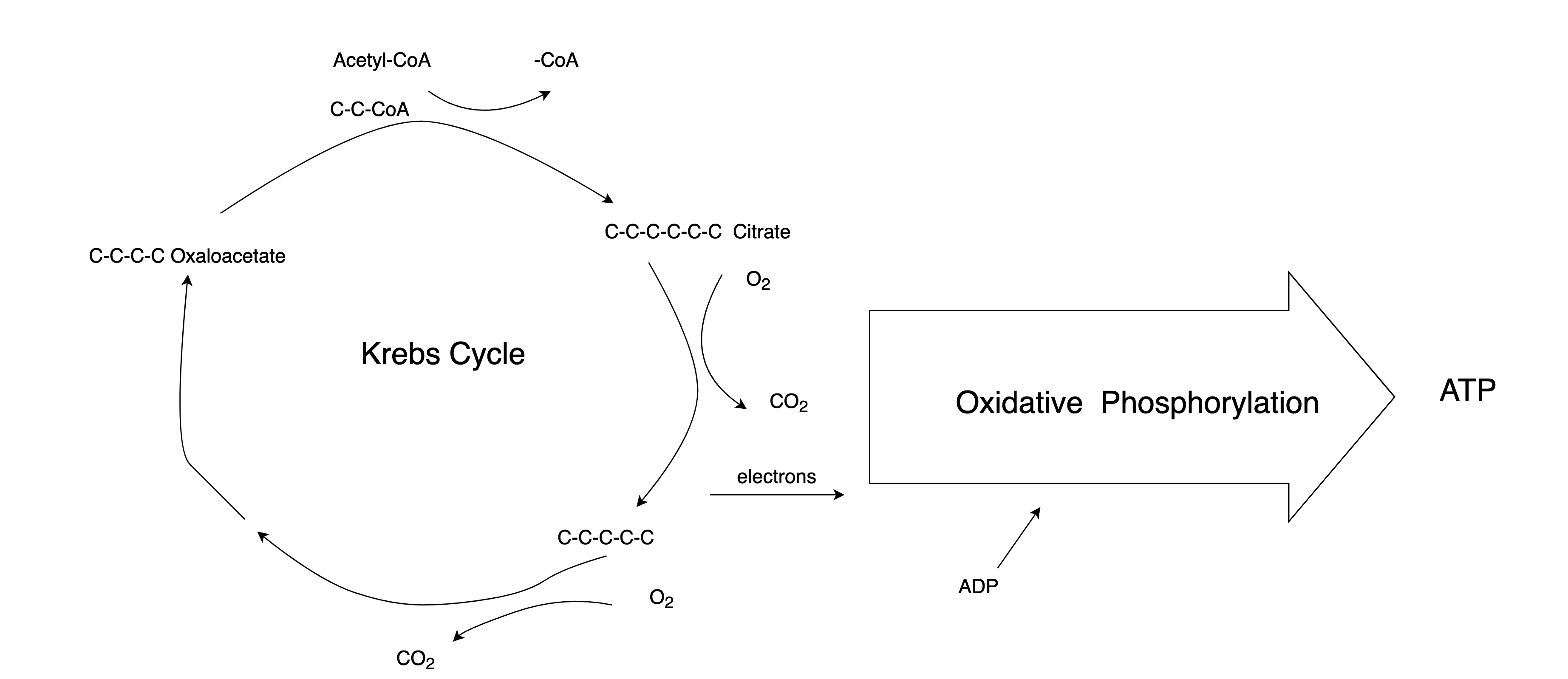
Figure 3. The Krebs Cycle
ATP is not the only product of the Krebs cycle; at least three Nobel Prizes have been awarded for contributions to our understanding of this process.
- The first step of metabolizing glucose is glycolysis. Glycolysis is the fastest way to generate ATP, and crucially, it doesn’t need oxygen. It’s the energy source for anaerobic activities. Just like a computer has registers, cache, RAM, and a hard disk, the human body has different levels of energy stores that can be tapped at different speeds (I appreciate that the only way this explanation works is if my audience understands computers more than physiology. Don’t get me started on what’s wrong with education :-). As shown in Figure 4, for quick actions, like swinging a golf club, our body uses the ATP that’s already there. After 10 seconds, our body will have to tap the next level of reserve: phosphocreatine. These molecules donate a phosphate group to ADP, making new ATP immediately. When that is used up, the energy released by glycolysis is ready just in time. However, glycolysis can’t keep up for too long. The amount of glucose reserve in our body is limited. Besides, the anaerobic process turns pyruvate into lactic acid, which is the cause of painfully sore muscles.
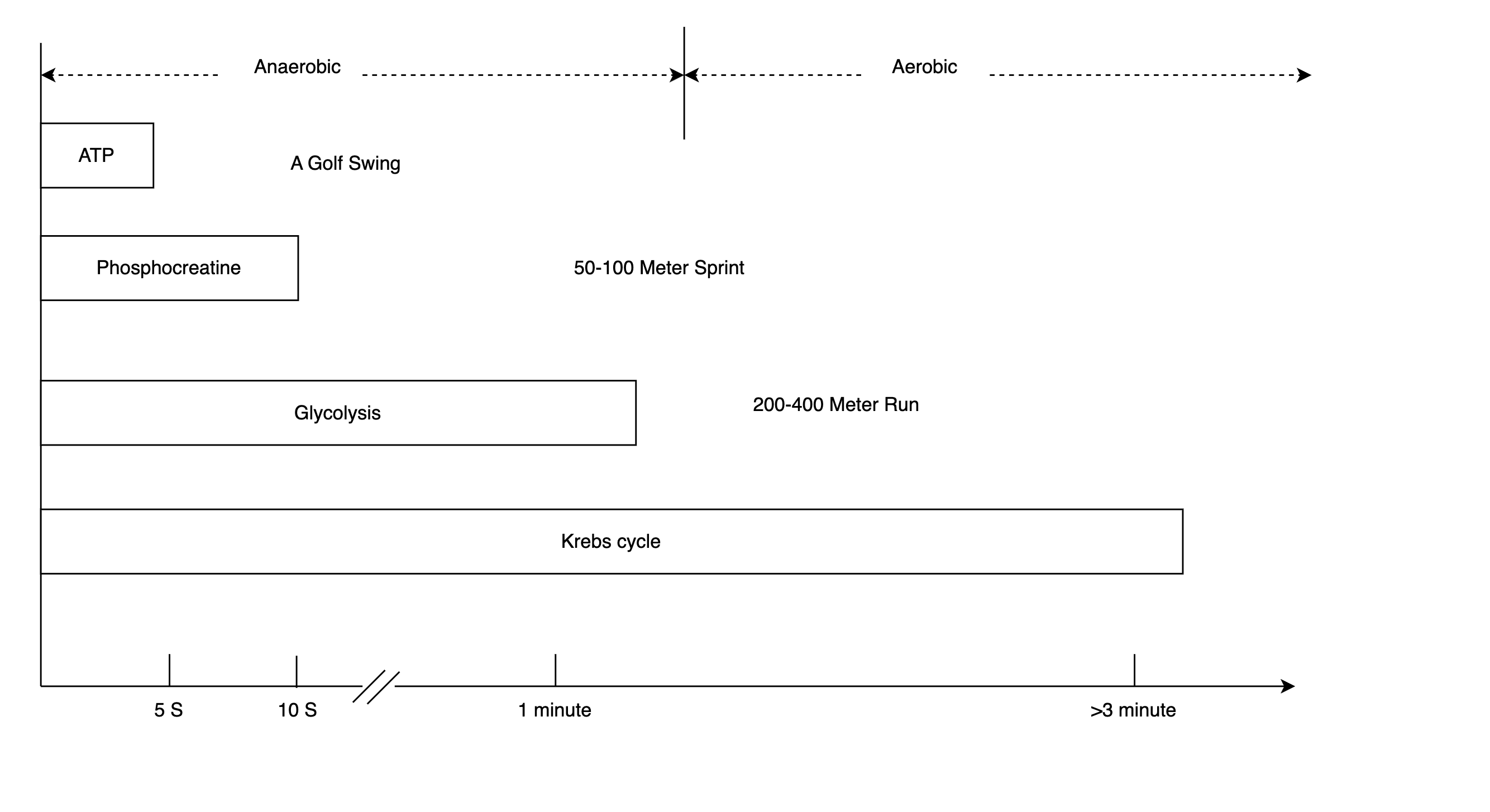
Figure 4. The Energy Caches
- The body’s mechanism for enduring energy provision is the aerobic system. It takes a bit longer because oxygen has to get to our muscle cells and start turning pyruvate into acetyl-CoA, which is fed into the Krebs cycle, another step that requires oxygen. The point of increased heart rate during exercise is to speed up the delivery of oxygen by blood. In the Krebs cycle, 28 more ATP are generated, making it our main source of energy for the long haul. By the way, it’s not true that your body doesn’t burn fat if your heart rate is outside the “fat-burning zone.” Upon activation of the aerobic system, the body burns both carbs and fat for energy.
- With a little energy input (a couple of ATP), pyruvate can be converted back to glucose. But acetyl-CoA cannot be converted back to pyruvate. This is important because blood glucose levels are tightly regulated. If it’s too low, the liver will have to make glucose. It can use pyruvate but not acetyl-CoA. This has several consequences that we will talk about later.
On the other hand, if blood glucose levels are too high, insulin is released and triggers cells to take up glucose and convert it into fat. In defense of insulin, it’s not the culprit that makes you gain weight. It does not create the source material for fatty acid synthesis out of thin air: you already have eaten too much to begin with.
- Our body can store a lot of fat. It can store a little bit of glucose. But it has no way to store excess protein. It uses proteins to build and repair body parts like muscles, organs, and even our fingernails and hair. It also uses proteins to make hormones and enzymes. If there’s any protein left over that the body doesn’t need right away, it undergoes the process of deamination, wherein the amine group is removed, and the remainder is converted into acetyl-CoA.
- Acetyl-CoA is the fuel for the Krebs cycle. It’s where protein, fat, and carbs converge in the metabolic pathways. As far as the Krebs cycle is concerned, it doesn’t matter where the acetyl-CoA comes from. If there is too much of it, the only exit is fatty acid synthesis. This is how too much food turns into too much fat. Without portion control, neither an all-meat diet nor a vegan diet automatically makes you lose weight. They sometimes work probably because their participants just lose their appetite due to the limited food choices.
- Fatty acids, with their long hydrocarbon chains, go through the relatively lengthy process of beta-oxidation to become acetyl-CoA. A typical molecule of fatty acid can generate 106 ATP when fully metabolized with oxygen. In contrast, each molecule of glucose generates 30 ATP. Pound for pound, fat is the body’s most efficient storage medium for energy.
- Fat is stored as triglycerides in fat cells, or adipocytes. The fat cells are like balloons in their capacity to expand. When your body accumulates more fat, the number of adipocytes doesn’t really increase, just the size of each one. As long as they still have spare capacity, it’s not dangerous to have a little more fat. How much these cells can stretch before it becomes a problem varies from person to person, mostly because of our genes. For example, the adipocytes of individuals of Caucasian descent are capable of greater expansion in comparison to those of Asian descent, thereby allowing for more considerable safe storage of fat.
- With blood glucose levels stable, the body stores extra glucose as glycogen in the liver and the muscles. This glycogen can be turned back into glucose and provide our muscles with energy at a moment’s notice. Interestingly, that means muscles have everything necessary for the Maillard reaction: protein and sugar. This is most obvious when you pan-sear a scallop on its own and get a nice brown crust.
There are about 400 grams of glycogen stored in the muscles and 100 grams in the liver. If we only use glycogen for energy, all of it will be used up in a day. In contrast, our body fat has enough energy to last us for up to three months.
- All proteins are built from 20 amino acids, just like all English words are built from 26 characters. When we eat proteins, our body dismantles them into their constituent amino acids. Then, it uses them to make new proteins. The proteins we eat are broken down into their building blocks. Nine of the 20 amino acids are so-called essential amino acids because they cannot be synthesized by our body. We have to get them from food.
- Alcohol, as Mr. Atwater pointed out, is also an energy source. It’s eventually metabolized to acetyl-CoA and fed into the Krebs cycle. So, getting a “beer belly” isn’t really about drinking too much beer specifically; it’s about eating or drinking too many calories in general. However, too much alcohol presents a unique hazard: it inhibits fatty acid oxidation and causes fatty liver.
- Sometimes the Krebs cycle cannot take in more acetyl-CoA. To figure out why, let’s revisit Figure 3 and look into the details of the Krebs cycle. We mentioned before that if our blood sugar gets low, the liver starts making glucose from pyruvate. Another precursor for glucose is the glycerol part of the triglycerides. Triglyceride (fat) is three fatty acids attached to a glycerol, as shown in Figure 4. The fatty acid chains cannot be used to make glucose by the liver, so eventually, the liver will need to look elsewhere for raw materials. When both glycerol and pyruvate are used up, the liver begins to commandeer oxaloacetate for gluconeogenesis. Without enough oxaloacetate, the Krebs cycle in liver cells slows down. Surplus acetyl-CoA is converted to ketones and sent elsewhere.
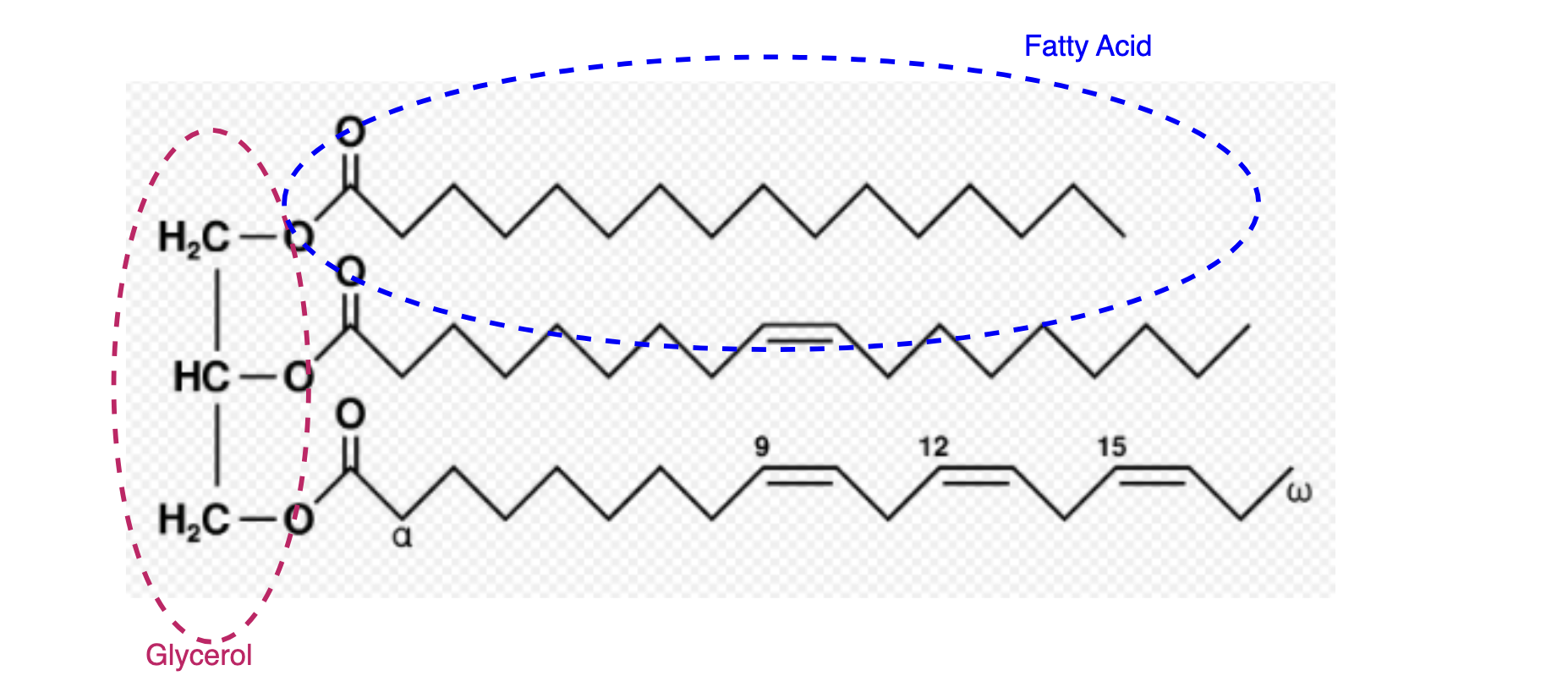
Figure 4. Triglycerides
- Low glucose levels in the body can happen for a couple of reasons. Starvation is one, but these days, it’s more likely due to low-carb diets. Physiologically, the low-carb diet mimics some aspects of starvation. With minimal carb intake, the body adapts to use fat for fuel. Fatty acids are broken down into ketones and sent to cells. The ketone bodies are then taken up by mitochondria, which convert the ketones back to acetyl-CoA and feed it into the Krebs cycle. The liver is the only organ that can divert oxaloacetate to gluconeogenesis. Other cells in the body have no problem metabolizing acetyl-CoA and closing the Krebs cycle.
The situation we just described is ketosis, the state the keto diet tries to induce. This adaptation takes time, though. During intense exercise, your body may run out of glucose reserves before it switches to burning fat for energy. This is known as “hitting the wall” or the “bonk.” It’s for this reason that marathon aid stations provide snacks rich in carbs, to forestall this depletion.
Weight Control, Healthy Food and Counting Calories
Now that we know calories inside out, eating right isn’t about ticking off boxes or gathering random food lists from the web any longer. It’s about using our newfound scientific insights to make smart choices. So what would be the best diet for weight control?
Weight is a measure of your body’s mass. Mass enters the body in the form of food and water. Some of it goes out as excrement. Some is retained to make and repair body parts. Everything beyond that is metabolized for fuel, which is either burned for energy or consigned to storage. Excessive weight comes from excessive body mass for energy storage. Losing weight happens when your body is using up more energy than it’s taking in, and you end up breathing out the excess mass as carbon dioxide and sweating or peeing it out as water. There is no secret formula or magic food: any diet that results in an energy deficit leads to weight loss.
But that’s about as useful as “eat less, exercise more.” It’s easier said than done, and it doesn’t really tell you exactly what to do. Let’s try to get a little more specific and practical.
First, what should we actually eat? Should we cut out meat, fat, carbs, or acidic food? The history of diet science is littered with the hubris of overconfident people who claim to know the exact makeup of a healthy diet. But unless prescribed by a doctor for medical reasons, any diet that limits the kinds of food you can eat is a bad idea. We need more variety, not less, in our food. We evolved to be omnivores. Homo sapiens are the only surviving species of the Homo genus probably because our ancestors could eat a bigger variety of food.
If we don’t eat meat, we may have a hard time getting the right amount of all the essential amino acids and certain vitamins that are common in animal products. Eliminating fat will deprive us of essential fatty acids. Fats play a pivotal role within the physiological framework. They make up cell membranes and the protective coating around our nerve cells called myelin. Some vitamins only dissolve in fat, so without fat, the body cannot retain them.
If we limit carb intake, the Krebs cycle slows down, fat oxidation becomes less efficient, and you will have a harder time participating in endurance sports. The liver also has to work overtime to make glucose. But why is the blood glucose level so important? For starters, our brains really like using glucose for energy. Studies show that after three days of strict fasting, the brain still gets 75% of its fuel from glucose. At least the brain can use ketone bodies in a pinch, but red blood cells can only use glucose for energy. There is a perfectly logical explanation: For mitochondria to produce energy with the Krebs cycle, they have to consume oxygen. But the job of red blood cells is to transport oxygen. They shouldn’t steal the cargo. That’s why red blood cells don’t even have mitochondria, and glycolysis is the only source of energy for them.
When you go on a low-carb diet, you might notice you lose weight pretty quickly at first. That’s because the glycogen store is being depleted. Glycogen is paired with water when it’s stored (technically, it’s a polysaccharide with a lot of hydroxyl groups, which make it hydrophilic). One gram of glycogen holds on to three grams of water. The initial phase of weight loss is largely due to the expulsion of water, a transient effect given the finite glycogen stores within the body.
The trick is adding to the variety while controlling the total input. Why do we often end up eating too much? Throughout human history, starvation was a perpetual threat. Our bodies have developed a sophisticated arsenal of protective mechanisms to guard against hunger. When we are not getting enough to eat, all kinds of alarm bells go off, and various energy preservation processes get going. On the flip side, having too much food is a relatively new problem in the history of human evolution. Even though we now know obesity is unhealthy, our genes haven’t quite caught up with the modern abundance of calories. Our bodies still enthusiastically stockpile surplus energy. We cannot count on our physiology to prevent overeating. The best defense is food that makes you feel full and keeps you feeling full.
Satiety is an important measure of food quality that often gets overlooked. All food gives us calories, but not all calories are created equal. Low-quality calories come from foods that have a lot of them, but have little else and don’t keep you feeling full. Now we can see the problem with refined carbohydrates like white rice: it consists almost entirely of easily digested starch, which leaves your stomach quickly and gets absorbed in no time. It’s the same with sugary drinks—they’re packed with what we call “empty” calories. If you are watching your weight, a good rule to follow is to never drink your calories.
In contrast, protein takes 2 to 4 hours to empty out of the stomach. It is harder to digest and travels further down your gut. Remember our discussion about Ozempic? Less digested food reaching the latter part of the intestine triggers the “I am full” signal. Digested proteins also elevate the amino acid and ketone levels in the blood. Consequently, a calorie from protein possesses a greater satiety value than one from carbohydrates. Another advantage of protein as a calorie source is that it incurs a higher cost of metabolization (the diet-induced thermogenesis in Figure 1). So protein’s net metabolizable energy is less.
As in the case of calories, you should be mindful of what else is in the food besides protein. It could be antibiotics and growth hormones from questionable meat or fiber and omega-3 fatty acids from avocados. Food quality should be considered in the whole food context.
Finally, for an article titled “The Science of Counting Calories,” we have to address this question: should we count calories? Science cannot answer questions that begin with “should” because it implies a value judgment, and everyone has different values. But as a practical matter, my answer is: Probably not
Comments
No comments yet. Be the first to share your thoughts!